Briefly explain the common costs sports teams have, such as uniforms, equipment, tournament fees, travel, and registration. Introduce fundraising as a way for players, families, and supporters to contribute without relying on a single fundraising event.
How to Choose the Right Fundraiser for Your Sports Team
Start with the practical side before jumping into the ideas. Explain that the right fundraiser depends on the team’s age, size, fundraising target, timeline, and how much time families and volunteers can give.
Cover
- How much the team needs to raise
- How quickly the money is needed
- Number of players and volunteers
- Whether the team has a strong local supporter base
- Whether the fundraiser works better online, in person, or through product sales
Sports Team Fundraising Ideas
Introduce the list naturally rather than simply saying “Here are 20 ideas.”
Wreath Fundraising
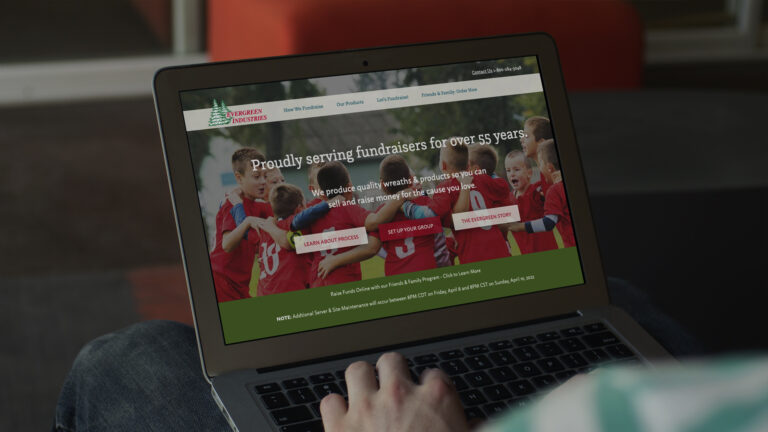
Explain how selling seasonal wreaths can give supporters something useful in return for supporting the team. Discuss how players and parents can share the fundraiser with family, friends, neighbors, and other community members.
Keep this section practical and connected to Evergreen’s actual fundraising offering.
Online Donation Campaign
Explain how teams can create a simple online campaign around a specific goal, such as new uniforms or tournament travel.
Mention sharing the campaign through
- Team social media
- Parent groups
- Personal networks
Team Merchandise Fundraiser
Discuss selling team shirts, hoodies, hats, or other merchandise.
Point out that supporters get something connected to the team while the team raises money.
Local Business Sponsorships
Explain how teams can approach local businesses for sponsorships.
Cover the basics
- Create a simple sponsorship proposal
- Explain what the funds will support
- Offer appropriate recognition for sponsors
- Approach businesses that already have a connection to the community
Raffle Fundraiser
Explain how teams can collect prizes and sell raffle entries.
Include a brief note that teams should check applicable local rules before organizing a raffle.
Restaurant Fundraiser
Describe partnering with a local restaurant for a designated fundraising event.
Keep it simple supporters visit the restaurant, participate through the agreed arrangement, and part of the proceeds goes toward the team.
Sponsored Fitness Challenge
Players can take part in a walking, running, cycling, or other fitness challenge while supporters contribute based on participation or completion.
This can work particularly well when the team wants an activity that involves players rather than simply asking for donations.
Sports Skills Clinic
Older players or coaches can host a skills session for younger athletes.
Charge a participation fee and use the proceeds for team expenses.
This also gives the team a chance to build relationships with younger players in the community.
Team Car Wash
A traditional option that can still work well for teams with enough players and volunteers.
Explain what the team needs to organize beforehand, including location, supplies, volunteers, and promotion.
Community Sports Tournament
Host a small tournament or friendly competition and charge an entry fee.
Mention the practical requirements, such as securing a suitable location, scheduling teams, arranging volunteers, and planning any necessary permits or insurance.
Online Auction
Teams can ask local businesses and supporters to donate items or experiences and then run an online auction.
This can be particularly useful when the team already has a strong community network.
Peer-to-Peer Fundraising
Instead of having one central campaign, each player or family can share the team’s fundraising goal with their own network.
Explain how this can help the team reach people outside its immediate community.
Team Challenge Fundraiser
Create a simple challenge involving players, parents, or supporters.
Examples could include
- Distance challenges
- Step challenges
- Skills competitions
- Team-versus-team challenges
The fundraising element can come through donations or sponsorships tied to the challenge.
Fundraising Ideas for Youth Sports Teams
Focus specifically on younger teams and the role of parents and families.
Family-Based Fundraising
Explain how parents and relatives can help promote a fundraiser without making young players responsible for handling everything themselves.
Product Fundraising
Discuss products that families can comfortably share with their networks.
Wreath fundraising can be mentioned again only if it adds value; avoid repeating the same explanation from the earlier section.
Youth Sports Challenge
Explain how a simple, age-appropriate challenge can combine participation and fundraising.
Online Fundraising Ideas for Sports Teams
This section allows us to naturally capture the online side of the topic without changing the article’s main intent.
Social Media Fundraising
Explain how teams can use existing social channels to share the goal, fundraiser, progress updates, and final results.
Online Donation Pages
Discuss creating one clear destination where supporters can learn about the fundraiser and contribute.
Peer-to-Peer Campaigns
Explain how players and parents can each share the campaign with their own networks.
How to Get More People Involved in a Team Fundraiser
Keep this section practical rather than giving generic marketing advice.
Cover
- Set a specific goal
- Explain what the money will be used for
- Give players and parents clear instructions
- Start promotion early
- Make participation easy
- Share progress during the fundraiser
- Thank supporters afterward
How to Pick the Best Fundraiser for Your Team
Use short paragraphs rather than another giant list.
Explain how different situations call for different approaches
Need money quickly : Choose a simple fundraiser that requires little preparation.
Have a strong local community : Consider sponsorships, restaurant fundraisers, tournaments, or product sales.
Have supporters in different locations : Online donation and peer-to-peer campaigns can make participation easier.
Want players actively involved : Fitness challenges, skills clinics, and team events can work well.
Want supporters to receive something : Product or merchandise fundraising gives them a tangible item in return.
Final Thoughts
Close by bringing the focus back to choosing a fundraiser that fits the team rather than suggesting that one idea works for everyone.
Mention that teams can also combine approaches for example, a product fundraiser with an online campaign or local sponsorships.